
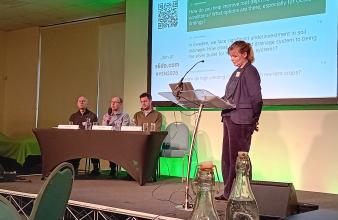

This panel session was based on climate resilience. Questions from the audience were posed to our panel of experts. See some key questions and insights below:
Do regenerative farming systems introduce more or less risk?
The panel gave a balanced viewpoint, emphasising the importance of good establishment for regenerative systems to be successful: Regenerative systems can be more resilient when establishment is good. Where establishment is poor, regenerative systems can introduce more risk.
How easy are climate resilience strategies to implement, what are the trade-offs and are people implementing them?
The panel emphasised the need for business resilience to enable climate resilience - you cannot have one without the other. "Resilience starts with the bottom line". The discussion moved onto how climate resilience can be enabled through policy. The latest iteration of the SFI was sees as a key opportunity in enabling this. Additionally, getting what you can control right to begin with was mentioned as what farmers should concentrate on. This included ensuring you have good soil condition, and good drainage to account for possible wet or dry conditions. Panelists mentioned that good drainage can often be overlooked and is a key strategy in avoiding waterlogging.
How do you help improve root dept to combat dry conditions?
The panel members discussed a variety of strategies to improve rooting. It was highlighted that drilling just one day earlier can have a big impact on rooting benefits. Soil compaction was brought up as a common issue that the panelists have observed effecting rooting. The availability of nutrients was also mentioned as being vital throughout the growth phases, not just during rooting. In keeping with a lot of discussions throughout the day, the value of organic manures (e.g. slurry, anaerobic digestate) was highlighted in providing highly available nutrition, especially when it comes to P requirements.
In a changing climate, are there any lessons we can take from other countries around the world?
The panel members described how we can look at places around the world that have a similar climate to what we can expect in future. Mid-South France was identified as a place that may have a similar climate to what we can expect in a decade or two. The panel suggested looking at the varieties selected in these regions and emphasised the value of variety selection in climate resilience. Uruguay and New Zealand were also mentioned as countries that have led approaches to resilience and adaptation.