

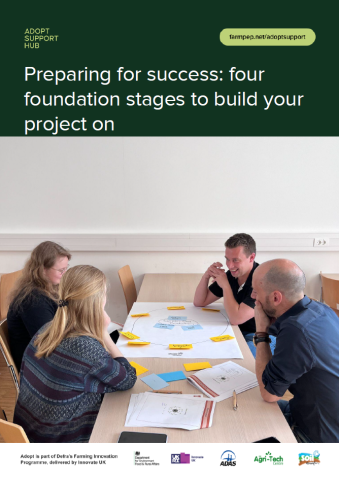
This will allow your team to make sure all the building blocks are in place, address foreseeable risks and clarify grey areas to work effectively. Here are some ideas and tools to make this happen.
While it can be tempting to jump straight into action, it pays to take some time to assess: what shared resources, knowledge and skill the partnership has; what is missing; what partners’ motivations are; how these motivations align (or differ!) from the project’s shared purpose and goals; working styles and schedules; and potential risks. Only then will you be equipped to start planning and implementing actions. Don’t worry; this process doesn’t have to be long. Here we highlight a few areas to focus on and suggest tools to help you explore and document these items. Having this strong base will help you navigate the project in the long run.
1. Clarify partners’ individual motivations as well as the project’s common purpose/general goals.
In these projects which may include partners from a diversity of backgrounds, expertise and knowledge come together from different perspectives e.g. farmers, facilitators, businesses, researchers. - It is important to acknowledge that not all partners will have the same motivations to join the project; understanding different motivations will help partners appreciate why others do what they do.
It is even more relevant to identify the team’s shared purpose and goals for the project; this shared vision is what will allow the team to work towards a common goal and objectives regardless of each partner’s particular motivations.
What to do:
o Explore different partners’ motivations to join this project (also consider the funder’s needs and motivations, as they are a crucial actor).
o Identify shared/similar motivations and/or areas of interest in this project for different partners.
o Narrow down within these shared motivations: explore what the common purpose (the overarching reason or intention behind the project) and associated goals (specific, measurable steps towards the desired outcome) of the project should be.
o Explore what internal and external opportunities and challenges are that could make it easy or difficult for the team to reach their purpose and meet their goals.
o Based on the previous step, create a risk registry.
Tools to do this: Speed boat (30ms to 2hrs)
2. Identify what knowledge, skills and resources are available for this collaborative project and explore how to address any gaps by leveraging networks.
Collaborative projects are characterised by bringing together a variety of knowledge, skills and resources … but that doesn’t mean there are no gaps!
By exploring what the partners have access to it’s possible to identify any missing people, skills or resources needed to meet the project’s goals. You can leverage your collective networks to source what is missing (or an effective replacement): the team can then make sure they are well prepared to develop and implement their project and prepare for any future challenges.
What to do:
· Map what knowledge, skills and resources would be needed to meet the project’s goals and shared purpose (see point 1).
· Map the knowledge, skills and resources (relevant to the project) available in the group.
· Identify gaps between what you’d like to achieve and the project’s available knowledge, skills and resources.
· Leverage your shared networks to source what is missing.
Tools to do this: Network Analysis (30ms to 2hrs)
3. Explore how you’ll work together
Once the partnership has agreed on a shared purpose and goals and has sourced the knowledge, skills and resources to make it happen, it is time to agree on the ways you’ll work together.
What to do:
· Explore the different participants’ schedules and ways of working, understanding when and why partners are available (or not) and identifying preferred ways of communicating, coordinating and implementing work. This will allow the partners to tailor the original plan to partners’ needs and availability.
· Evaluate how to create the conditions for everyone to contribute. Exploring people’s motivations, ways of working and schedules allow you to better understand what they need to participate and contribute to the partnership.
· Identify what each partner will contribute to the project, and when they will do it; these could be financial, personal, in kind and representation contributions, amongst others.
· Agree on your “shared rules”:
· Agree on the project’s unique set of rules, both for internal and external relations.
· Agree on a decision-making model to implement the set of rules and identify how differences will be managed on a strategic (big picture) and operational level (day to day).
· Agree on how the group will communicate internally and with those outside the team.
· Create official documents and/or guidelines to enshrine these agreements.
Tools to do this:
· Ground rules: Identification of opportunities and challenges of agreement-based cooperation (30ms to 2hrs)
· Governance Model Canvas (adopted from Virtual Living Lab ©Fernando Vilarino, Library Living Lab, ENoLL.) (30ms to 2hrs)
4. Consider how and to whom you’ll disseminate what you learn.
A key aspect of ADOPT projects’ implementation is to share the process and knowledge created in the trial beyond those directly involved in it. This will allow the wider farming community to learn from projects’ experiences and outcomes. All results are valuable and should be shared, whether they are considered a success, neutral or even a “failure” when compared with initial expectations; they can help identify positive practices to implement and provide information to avoid practices, technologies or processes that might not work.
Sharing your experiences from the start is a useful resource for the wider community, as it helps others explore a process without incurring in the risk. Projects often start sharing their journey and results once it ends. Unfortunately, this reduces the engagement between a project’s partners and the wider community that could benefit from the project’s process and results and lessens the impact of the dissemination process.
What to do:
· Discuss at the start who the project would like to share this information with; think beyond the obvious audiences.
· Once identified, explore how you will communicate with these audiences. Explore what kind of materials/activities (online, in person, word of mouth, through events, other resources) could help disseminate this project and reach out for support from the ADOPTSupport Hub.
· Identify at the start what needs to be gathered to share lessons learnt.
· If possible, appoint “champions” to share your lessons: project participants who could share their experience and inspire others.
· Think of any accessibility and inclusion measures that should be implemented to reach your audiences in an inclusive manner.
· Leverage the ADOPT support hub to explore peer to peer opportunities with other ADOPT projects.
Tools to do this:
· Personas method (to identify and characterise audiences) (1 to 3hrs)
· ADOPT Support Hub team!
All ready? Now you have a clear purpose, the necessary tools, shared goals and an agreed framework to work together it is time to start the project’s implementation phase! In this next phase you should review your planning, fine tune the original plan if needed, assign roles and responsibilities and start implementing your activities! To learn more about this, check our Implementing your Project. Top Tips article.
Interested in learning more about these stages? The ADOPT Support Hub will organise periodic online workshops to explore them in more detail, provide real life case studies to inspire you and give you an opportunity to ask your questions and get support. Visit our website to find out more.
Further resources:
Guides
· Coming Together: How to Guide
· Connected Partnerships: How to Guide
· Healthy Partnerships: How to Guide
· Achieving Impact: How to Guide
Tools
· Impact, assessment and evaluation tools