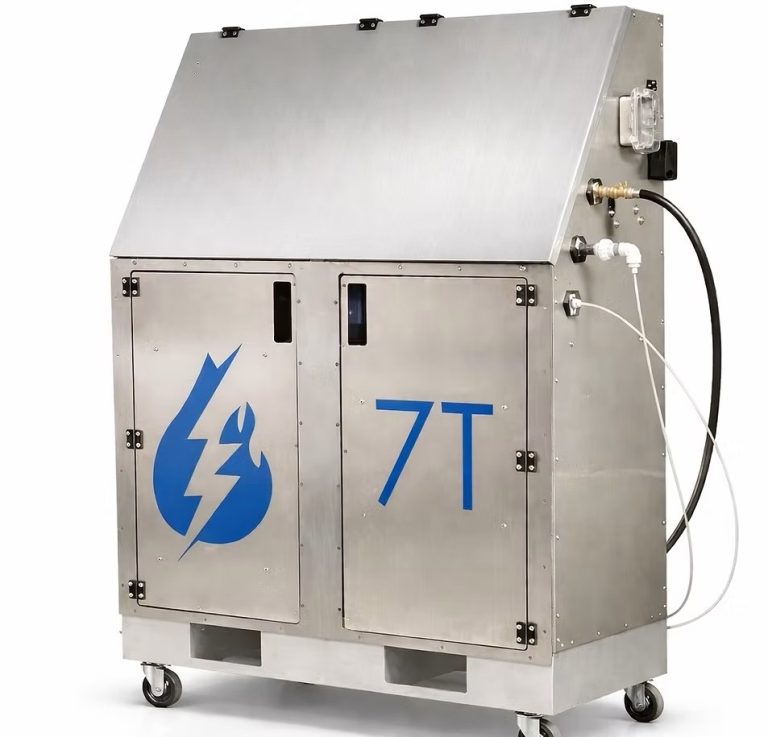

Firewater is a revolutionary technology enabling production of nitrogen fertiliser on-farm at low cost through plasma electro-catalysis. Developed in the US, we've now brought the technology to the UK through an Innovate UK supported Defra ADOPT grant.

Plasma Activated Water (PAW) benefits and potential:

  • Nitrogen Source – Plasma Activated Water mimics lightning by converting atmospheric nitrogen into nitrates, providing clean, salt-free, on-demand fertiliser replacement that can reduce your reliance on synthetic options.
  • Microbial Stimulation – The reactive species (RONS / RNS) in PAW can promote beneficial soil microbes, potentially enhancing nutrient cycling and plant-microbe interactions.
  • Antimicrobial Effects – PAW ROS can inactivate harmful bacteria, fungi and bio films, reducing soil borne diseases and acting as a natural disinfectant when applied to soil or foliage.
  • Plant Defense Trigger – PAW activates plant defense genes (like those for phytoalexins), boosting natural resistance to stresses and pathogens, which benefits the overall plant-soil ecosystem.
Plasma Activated Water Key Benefits for Agriculture
  • Sustainable and Eco-friendly – PAW can reduce chemical use and run-off, can use renewable energy for production and can be made on-farm. Reducing a farms carbon footprint significantly.
  • Multi-functional – Acts as a fertiliser, growth promoter, and disinfectant. PAW is non-toxic and supports plant and soil health to promote farm profitability.
  • Improved Plant Outcomes – Enhances germination, biomass, yield and resilience to environmental stresses.Firewater technology

Related Organisations

Connected Content

Nitrogen is required annually by most crops (except pulses) to achieve yield and quality. Judging how much N to apply is a key part of nutrient management.

Nitrogen Use Efficiency is a widely used term increasingly discussed across industry and between farmers. However it can mean different things to different people, and is best defined with care.

Fertilisers, especially nitrogen, give some of the biggest environmental impacts of any inputs, from both their manufacture and their application.  A range of innovative approaches are being developed to reduce the energy costs, greenhouse gas emmissions and waste associated with the production of fertilisers.

This Topic doesn't yet have a Stewarded summary, but connected groups, content and organisations show below. Click the 'Ask to Join' button if you would like to be a Steward for this Topic and provide a summary of current knowledge and recommend useful resources, organisations, networks and projects. "Like" this Topic if you would like to see it prioritised for providing a wikipedia style summary.

Supporting on-farm research to understand what works on-farm, through explanations, evidence, experimentation and exchange

This Defra ADOPT project is testing an exciting new technology from the United States that can allow farmers to produce nitrogen on-farm with a low-cost electro-catalysis plasma process.   

A practical overview for farmers, advisers, and researchers Plasma Activated Water (PAW) is created when atmospheric plasma interacts with water, producing a solution rich in reactive oxygen and nitrogen species (RONS) such as nitrates, nitrites, hydrogen peroxide, and ozone. These compounds give PAW antimicrobial properties and can act as a mild nitrogen source, making PAW a promising chemical-free input for agriculture. PAW is emerging as a potential alternative to conventional fertilisers, seed treatments, and pesticides, and can be produced on‑farm using only air, water, and electricity. [plasmatrea...ment.co.uk] Interest in PAW is growing in the UK and internationally as farmers look for sustainable tools that support plant health, reduce reliance on imported fertiliser, and improve resilience. Research indicates PAW can enhance seed germination, root growth, disease suppression, and nutrient availability. [ukagritechcentre.com] firewaterag.uk

ADOPT (Accelerating Development of Practices and Technologies) is a funding competition designed to support farmer-led, on-farm trials and experiments. Funded by the Department for Environment, Food and Rural Affairs and delivered by Innovate UK, it aims to generate, test, and demonstrate innovative solutions to challenges in agriculture, horticulture, and forestry.