Oilseed YEN lessons - a history
- The YEN has collected data on 359 yields since 2016.
- Cross drilling farmer led trials showed positive yield effects when used vs wide rows, highlighting that plant spacing is key.
- Previous data set analysis showed that the ratio of seeds per pod wall are associated with higher yields, highlighting that seeds per pod are key.
- Oilseed YEN establishment beauty contest highlighted that establishing OSR in the era of CSFB is possible.
Yield Partition Analysis
This most recent analysis involves separating out the top and bottom 25% of yielding entries within each year. This allows us to test for statistically significant differences between the measured parameters of the two groups. What this gives us is associations, not cause and effect. This analysis included 359 yield data points with a range of 1.4 to 7.4 t/ha yield and 5.9 to 14.9 t/ha potential yield. The aim of this analysis is to:
- Use YEN physiology data to describe a YEN crop ideotype (An idealised structural model of physiological and morphological traits. A product of both genetics and management)
- Interrogate the data for management and site factors associated with high yield.
- Use the data to hypothesise potential management approaches.
Describing a high-yielding ideotype
- Higher yields are associated with larger canopies, but modelling indicates that they more efficiently capture light and water and covert biomass into seed. (Larger, yet also more efficient canopies and higher harvest index).
- High seed set in the crop is central to achieving high yield.
- Optimised canopy size at flowering (GAI 3.5-4.0) maximises seed set.
- Longer green tissue and more efficient resource conversion associated with effective seed fill.
- Higher yielding crops capture a greater share of available resources.
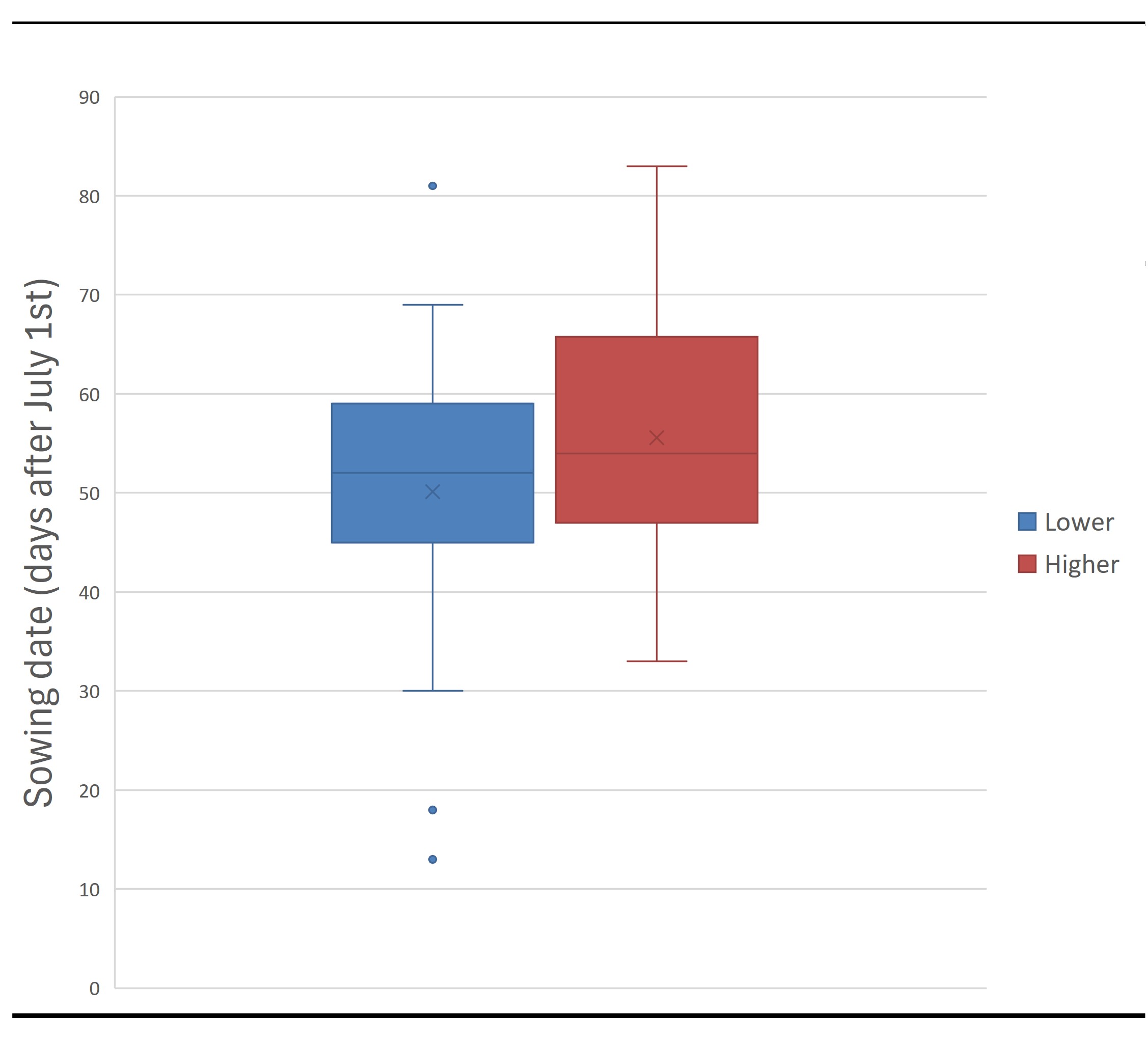
- Higher yielding crops tend to be sown slightly later and flower later. (5-10 days)
- This could be related to Cabbage Stem Flea Beetle avoidance in high pressure areas or overly large/early maturing canopies.
- Variation around the mean is large (in both low and high yielding groups, showing that choosing a sowing date to suit the prevailing conditions is still important).
Site details associated with high yields
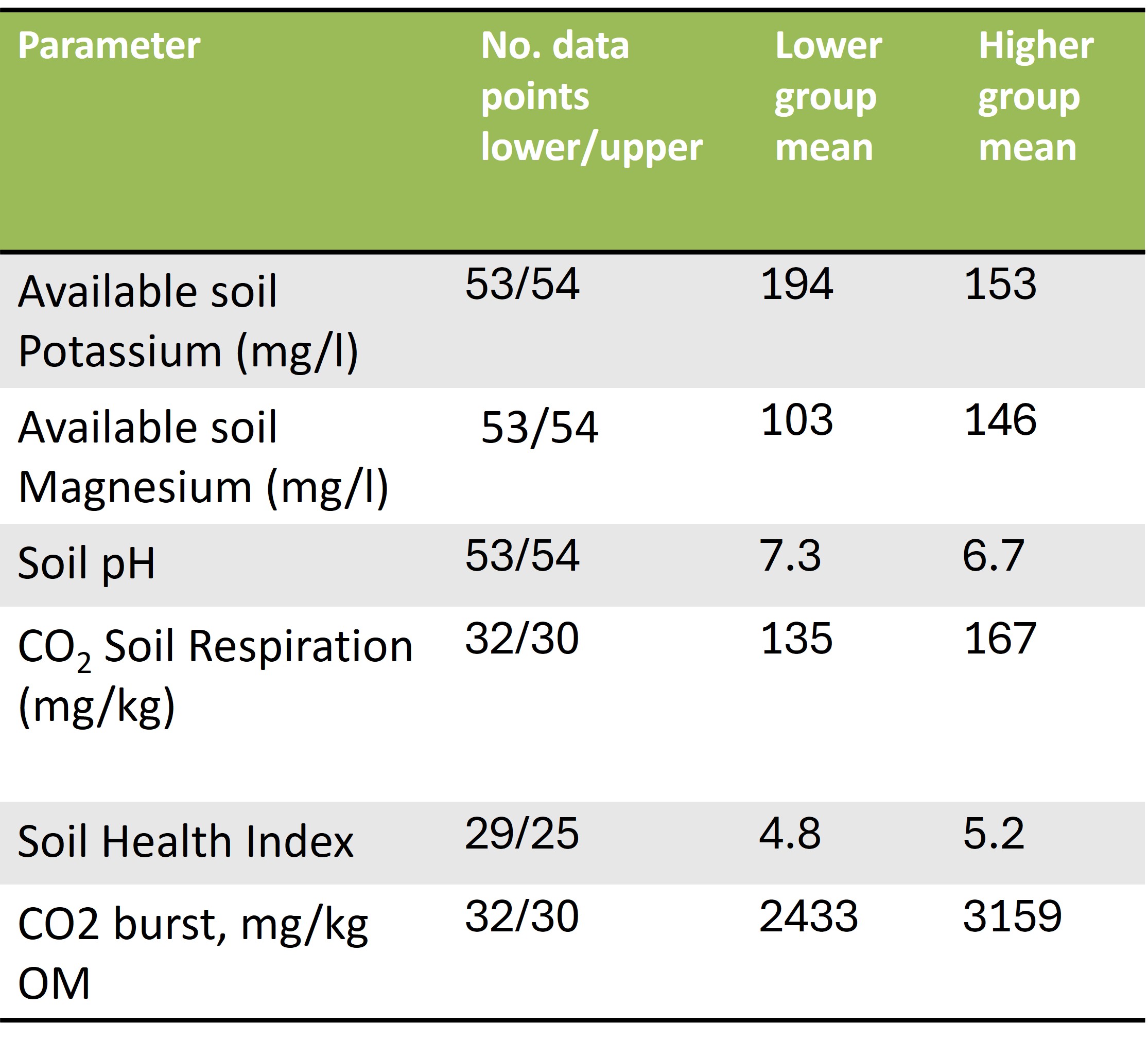
- Higher soil Mg, but less soil K. Could be a holdover from soil type rather than a driving effect.
- However, nutrient indices are adequate in both high and low yield groups.
- P is still important.
- Lower pH may cause changes in micronutrient availability.
- On a subset of years, soil health and microbial respiration indices were associated with higher yields. This may have been down to the higher use of organic manures.
Farm management approaches with high yields
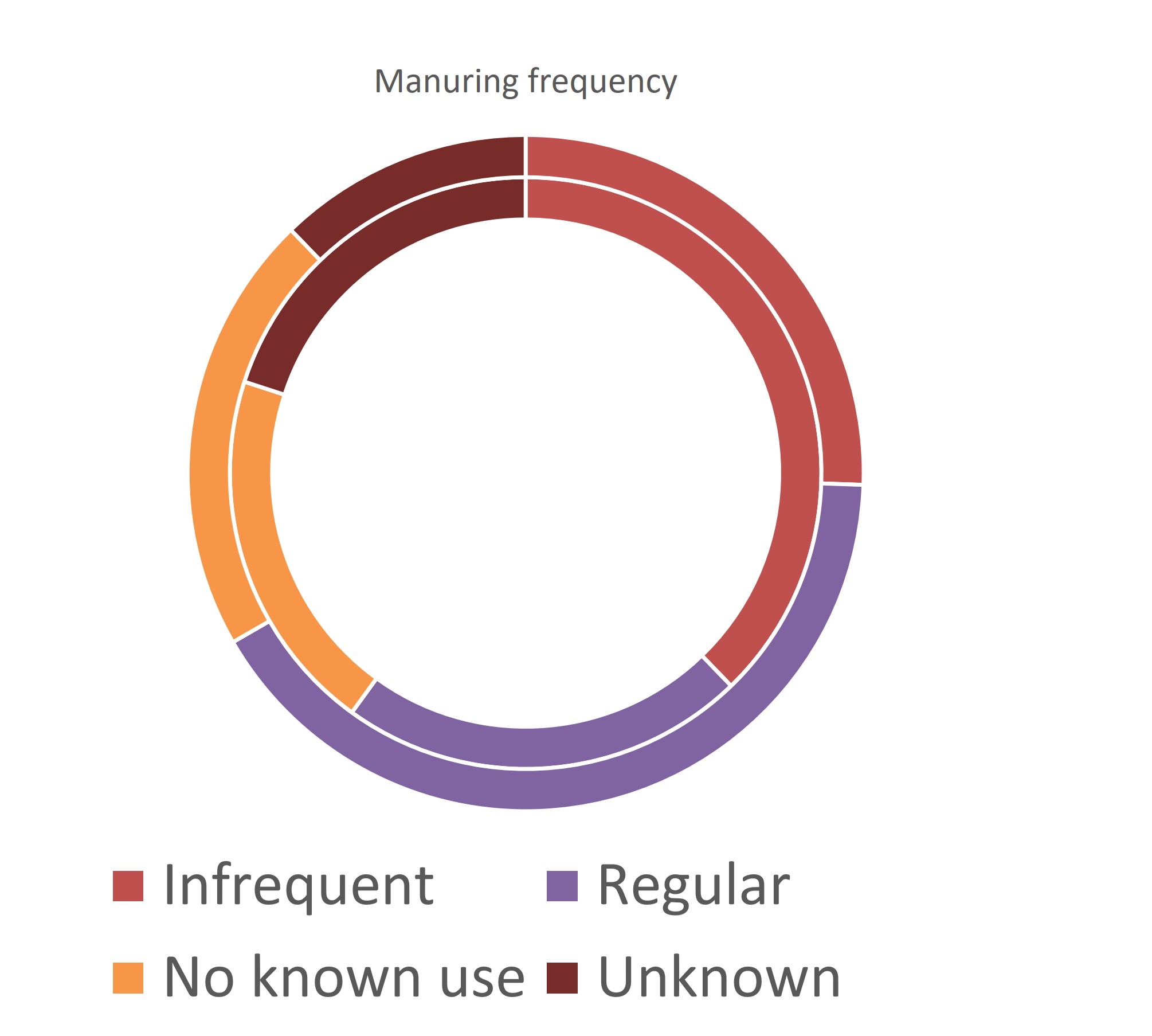
- Outside ring =upper yields
- Inside ring = lower yields
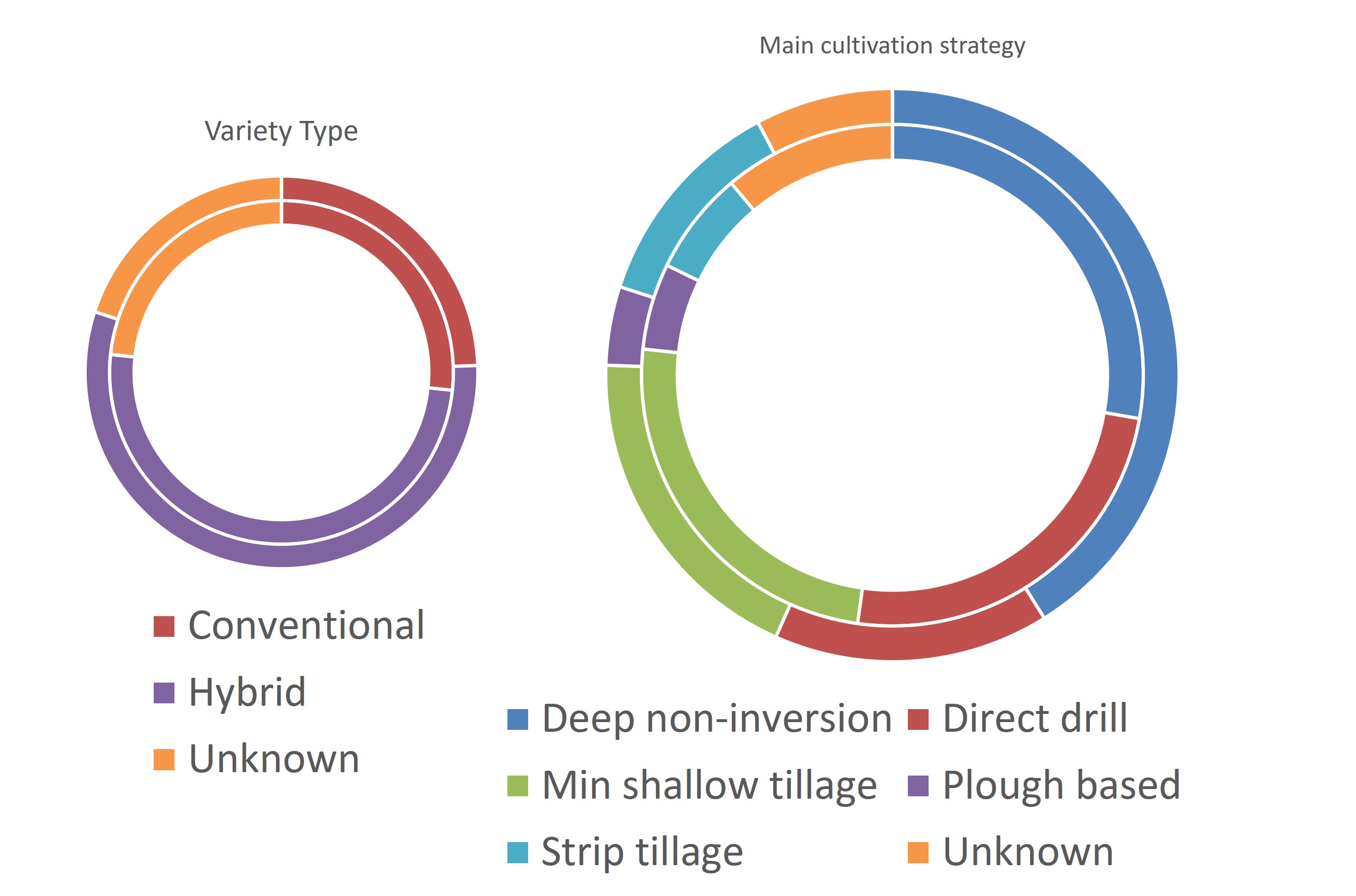
- Similar use of variety type across the dataset.
- Higher proportion of deep non-inversion tillage in the higher yielding partition.
- Most farms used a mix of N fertiliser types.
- More regular manuring is associated with higher yielding crops.
- There are no obvious differences between the type of bagged N applied.
Nutrition and establishment
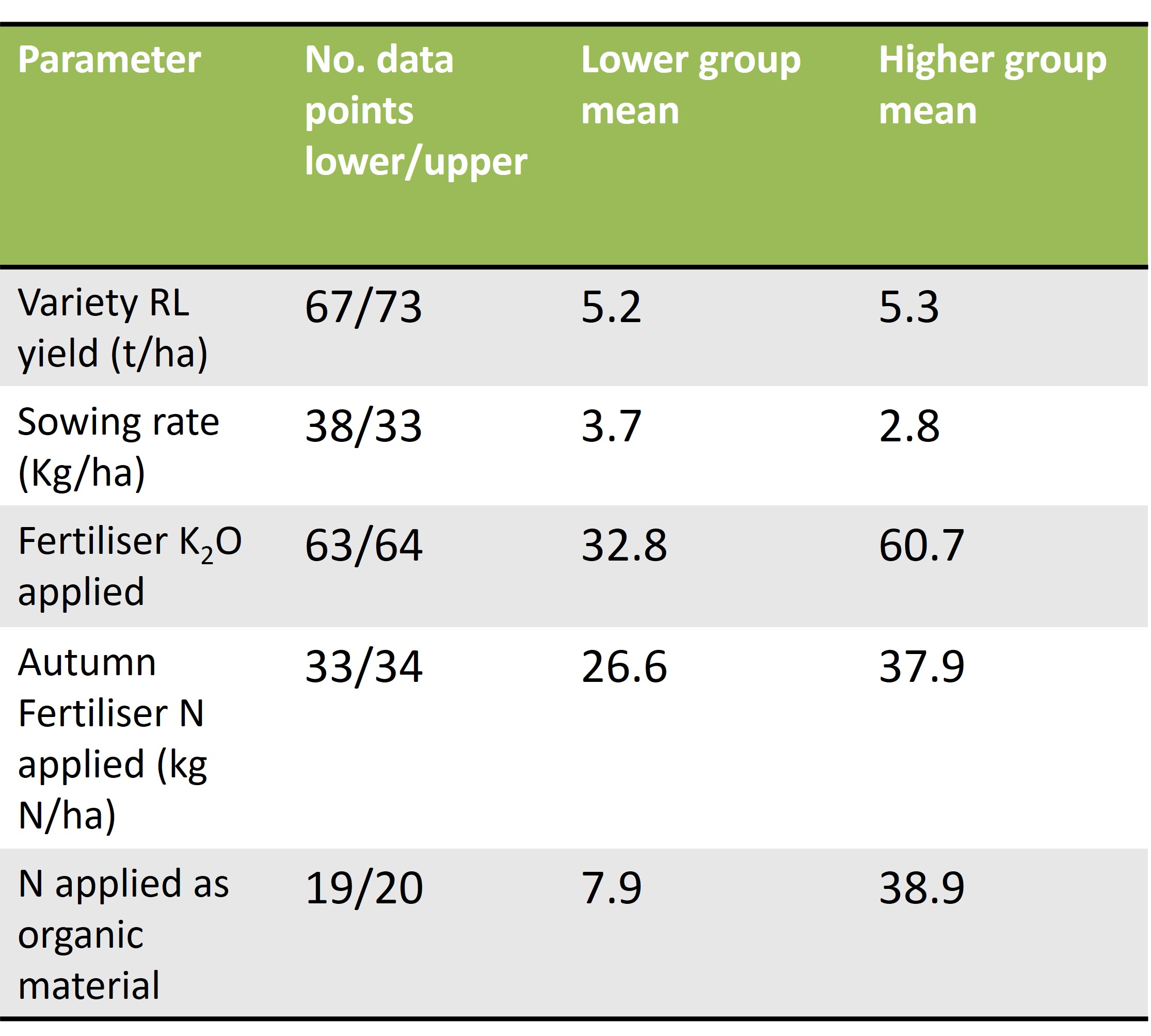
- Use of higher yielding varieties according to RL
- Lower seed rate (lower plant populations)
- Nutrition:
- Good early nutrition, with use of organic manures
- Autumn N and total K
- Total N and S not significantly different but still important to get right.
Crop protection
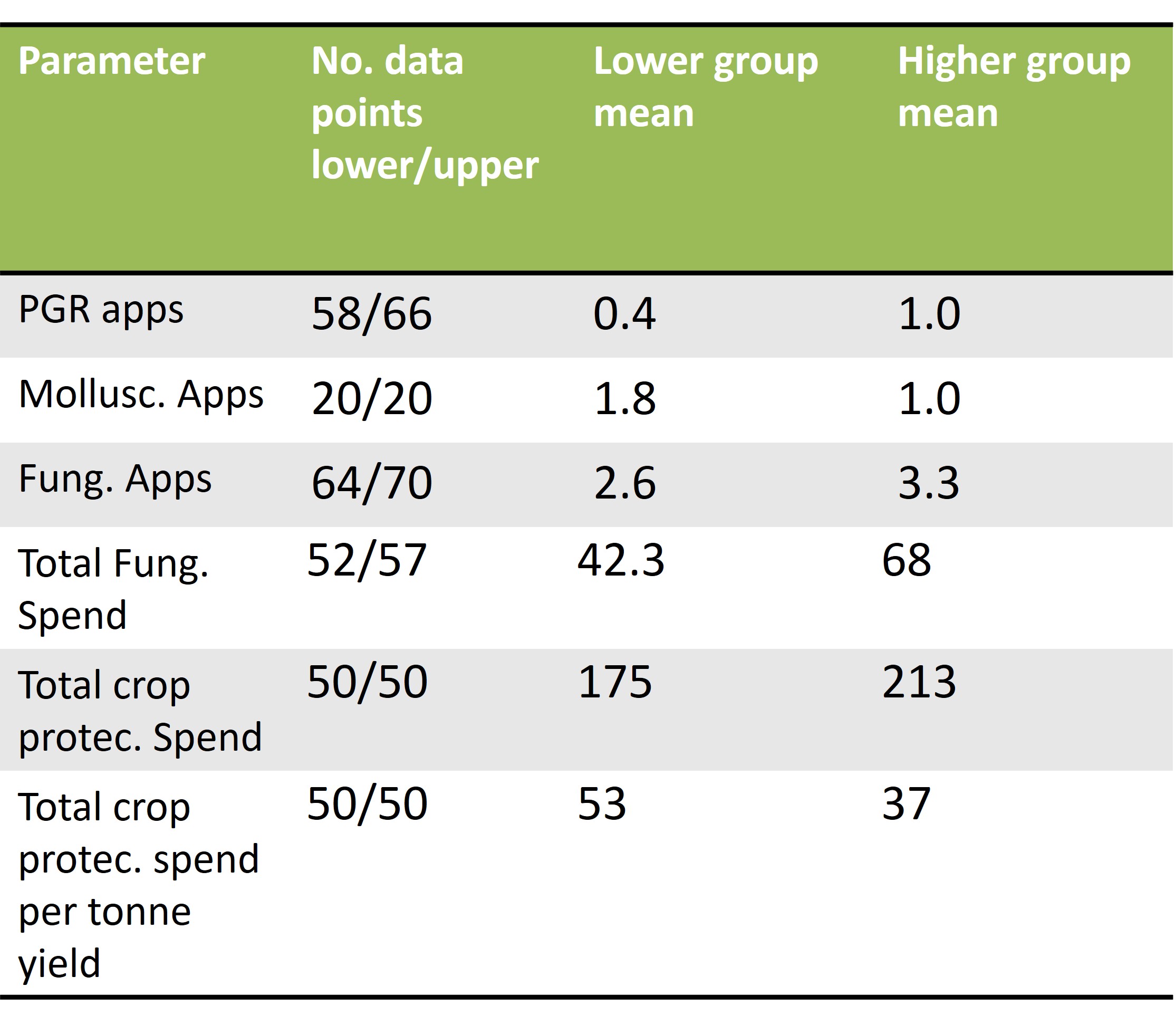
- Higher yielding crops tend to use more PGRs
- Higher yielding crops use more fungicides
- Lower molluscicide use in high yielding crops may indicate lower slug pressure
- There is no association with insecticide use
- Note: Higher potential crops could be seen as more suitable for investment of farm inputs
Many OSR YEN high yielding strategies also relate to potential CSFB IPM strategies. This highlights that aiming for high yields and CSFB IPM can be combined together. The top 10 tips for CSFB IPM are below:
Cabbage Stem Flea Beetle (CSFB) IPM top 10 tips (AHDB and OSR Reboot)
- Ditch the date - flexible drilling date depending on moisture and CSFB migration
- Chase perfection at establishment - good seed-to-soil contact, moisture and CSFB migration
- Keep your distance - Increase time and distance from previous OSR crops
- Improve larval tolerance - fewer, bigger plants
- Make use of muck - Organic materials support growth and disrupt beetle damage
- Park the pyrethroids - consider resistance and impact on natural enemies
- Create companions
- Build brassica buddies - Use trap crops where appropriate
- Stir it up after harvest - light cultivations after harvest may disrupt CSFB emergence (more data being collected)
- Unlock hidden gems - stack tactics and test on farm
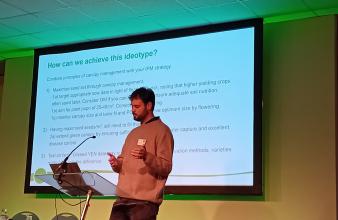
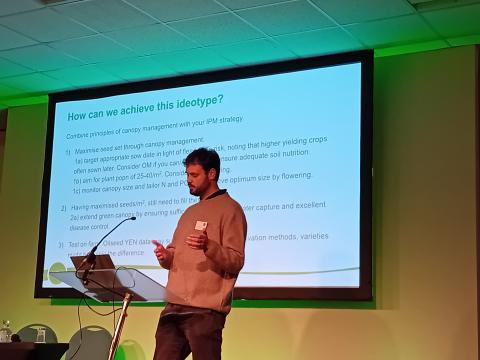
Achieving the ideotype
Combine principles of canopy management with your IPM strategy.
- Maximise seed set through canopy management.
- target appropriate sow date in light of CSFB risk, noting that higher yielding crops are often sown later. Consider organic manures if you can / autumn N and ensure adequate soil nutrition.
- Aim for plant population of 25-40/m2. Consider plant spacing.
- Monitor canopy size and tailor N and PGRs to achieve optimum size by flowering.
- Having maximised seeds/m2, still need to fill them.
- Extend green canopy by ensuring sufficient root depth for water capture and excellent disease control.
- Test on farm. Oilseed YEN data may suggest micronutrients, cultivation methods, varieties might help split the difference.