Project overview:
Nutrition management is a hot topic, with an increasing emphasis on improving NUE and an awareness of the vulnerability of fertiliser prices to geopolitical factors, driving growers to think more carefully about nutrient products, rates and timings.
The challenge is open to farmers, agronomists and companies working in nutrition to compete against each other and four standard control treatments to produce the best winter wheat yield, NUE and/or gross margin. Entrants are provided with soil analysis and soil mineral nitrogen (SMN) results from the trial field, along with the grain nutrient content from the previous year’s crop to help fine-tune their approach.
Throughout the season, leaf samples, NDVI imagery and photographs are taken to monitor crop progress in the control treatments. Entrants who also opt in for these assessments will receive in-season updates from both their treatments and the controls, enabling them to modify their programme if they wish. Just prior to harvest, biomass samples are collected from all plots and grain samples are sent for nutrient analysis. N use efficiency, N uptake efficiency and N utilisation efficiency will also be calculated using grain and straw nutrient analysis.
How does it work?
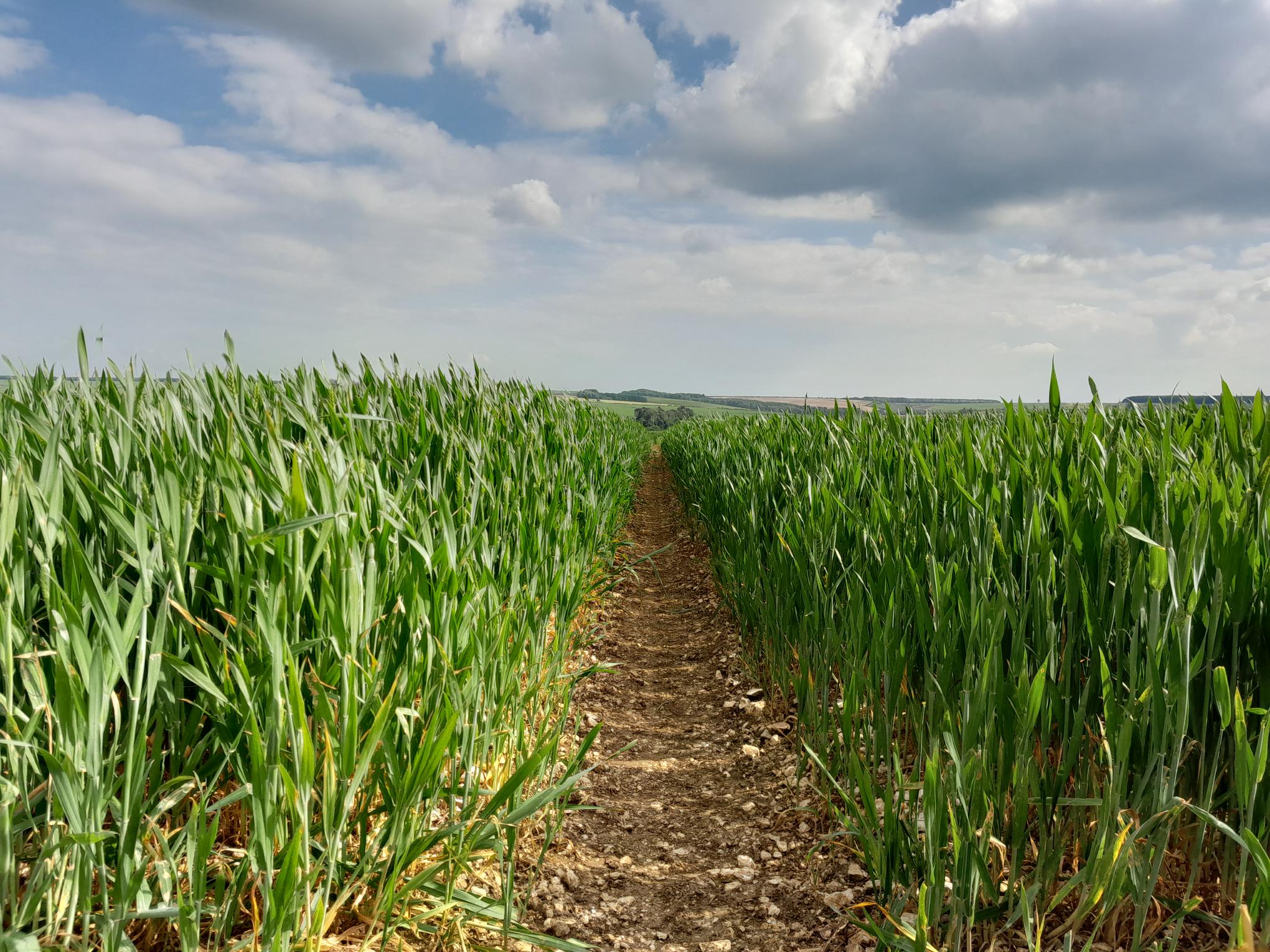
- The trial is managed as a fully replicated, small-plot trial in winter wheat hosted in the Yorkshire Wolds.
- All inputs except nutrition will follow standard farm practice and will be applied by the host grower.
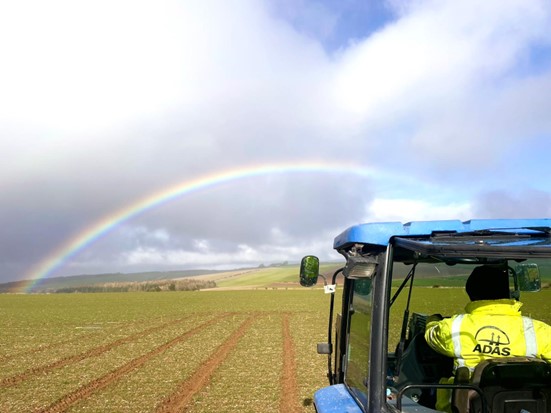
- Entrants each design a bespoke spring nutrition programme, to be applied by ADAS; this may include any major and minor nutrients, not just nitrogen, and up to six application timings.
- Standard N and sulphur (S) products (ammonium nitrate and ammonium sulphate) will be provided by ADAS for entrants to choose from; any other products should be supplied by the entrant.
- Entrants may adjust their programmes at any time during the project.
- Four control input strategies are included for comparison:
- Untreated control
- Industry standard control (based upon RB209 recommendations)
- Reduced N rate control
- An ADAS designed strategy
- For statistical validity, three replicates of each programme will be included in a randomised block design. Treatment order will be randomly allocated within each block.
- All entrants will receive initial baseline soil and tissue test results as well as grain analysis from the previous crop.
- Additional tissue sampling during the season, for the refinement of the nutrition programme, is available as an optional extra.
- Biomass and N partitioning will be measured on all treatments, allowing calculation of N use efficiency, N uptake efficiency and N utilisation efficiency.
- Yield and grain nutrient content will be measured on all plots and statistically analysed.
- All entrants will receive the trial results along with their ranking against all other entrants and controls for each assessment.
- To encourage innovation, strategies and entrants’ names will not be shared without permission.
Project funding, and how to enter:
To register your interest or for more information, please contact one of:
- Abbie Marshall, Abigail.Marshall@adas.co.uk, 07503 300038
- Kate Storer, Kate.Storer@adas.co.uk, 07860 753068