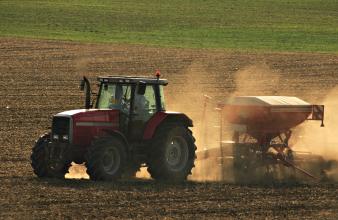


Tractor applying fertiliser

ADAS are planning the annual Nutrition Challenge to compare the effect of different spring nutrition programmes on winter feed wheat yield, nitrogen use efficiency (NUE) metrics and gross margin. The objective is to maximise outputs (yield and gross margin) while minimising losses to the environment by using novel practises and/or products.

The overall aim of the project is to ensure farmers are equipped and encouraged to use fertiliser efficiently, for the benefit of the environment and to maximise their farm’s profit and productivity.

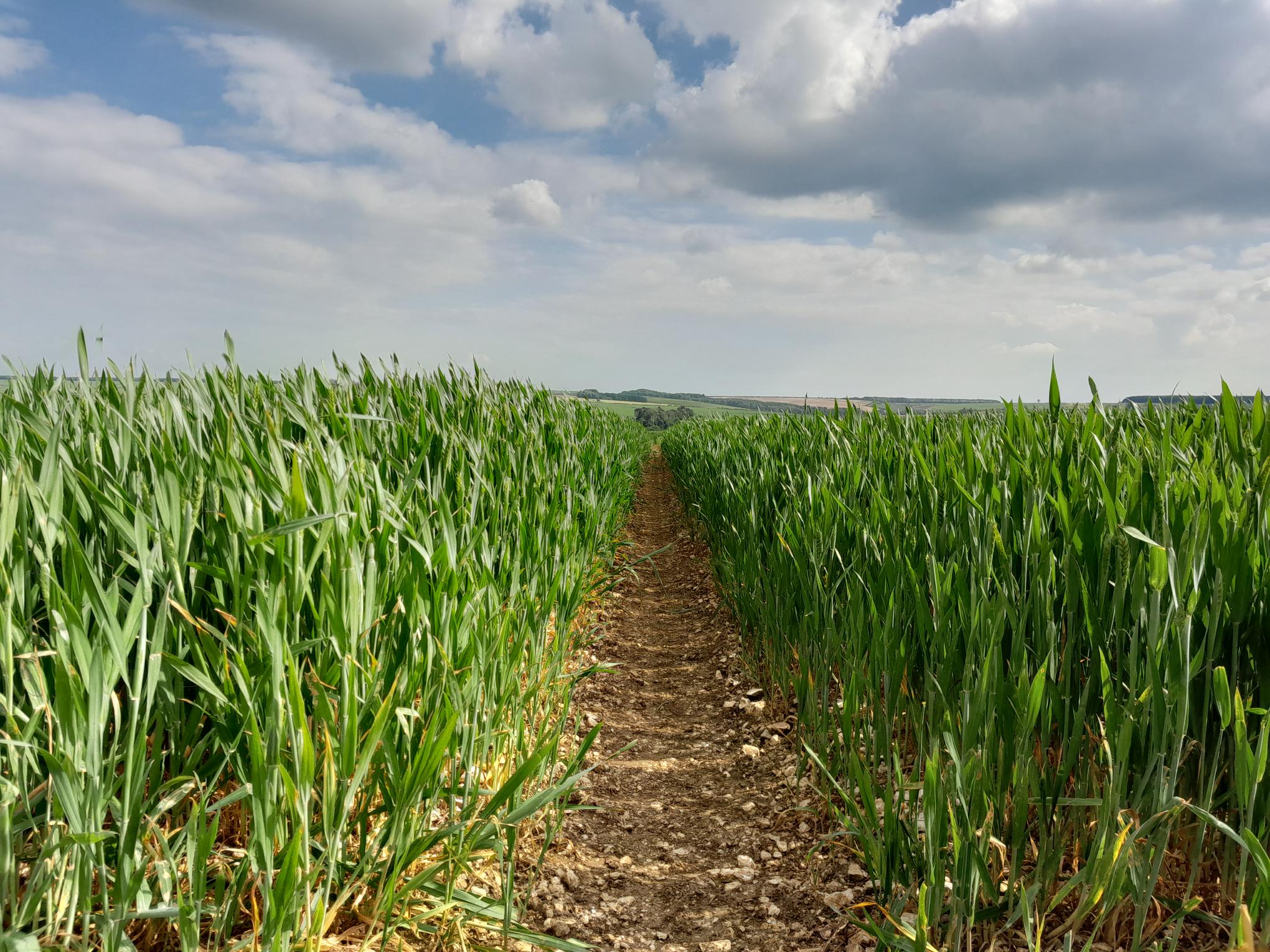
Image showing height difference between treatments


Project overview:

Nutrition management is a hot topic, with an increasing emphasis on improving NUE and an awareness of the vulnerability of fertiliser prices to geopolitical factors, driving growers to think more carefully about nutrient products, rates and timings.

The challenge is open to farmers, agronomists and companies working in nutrition to compete against each other and four standard control treatments to produce the best winter wheat yield, NUE and/or gross margin. Entrants are provided with soil analysis and soil mineral nitrogen (SMN) results from the trial field, along with the grain nutrient content from the previous year’s crop to help fine-tune their approach.

Throughout the season, leaf samples, NDVI imagery and photographs are taken to monitor crop progress in the control treatments. Entrants who also opt in for these assessments will receive in-season updates from both their treatments and the controls, enabling them to modify their programme if they wish. Just prior to harvest, biomass samples are collected from all plots and grain samples are sent for nutrient analysis. N use efficiency, N uptake efficiency and N utilisation efficiency will also be calculated using grain and straw nutrient analysis.

How does it work?

  • The trial is managed as a fully replicated, small-plot trial in winter wheat hosted in the Yorkshire Wolds.
  • All inputs except nutrition will follow standard farm practice and will be applied by the host grower.
  • Entrants each design a bespoke spring nutrition programme, to be applied by ADAS; this may include any major and minor nutrients, not just nitrogen, and up to six application timings.
  • Standard N and sulphur (S) products (ammonium nitrate and ammonium sulphate) will be provided by ADAS for entrants to choose from; any other products should be supplied by the entrant.
  • Entrants may adjust their programmes at any time during the project.
  • Four control input strategies are included for comparison:
    • Untreated control
    • Industry standard control (based upon RB209 recommendations)
    • Reduced N rate control
    • An ADAS designed strategy
  • For statistical validity, three replicates of each programme will be included in a randomised block design. Treatment order will be randomly allocated within each block.
  • All entrants will receive initial baseline soil and tissue test results as well as grain analysis from the previous crop.
  • Additional tissue sampling during the season, for the refinement of the nutrition programme, is available as an optional extra.
  • Biomass and N partitioning will be measured on all treatments, allowing calculation of N use efficiency, N uptake efficiency and N utilisation efficiency.
  • Yield and grain nutrient content will be measured on all plots and statistically analysed.
  • All entrants will receive the trial results along with their ranking against all other entrants and controls for each assessment.
  • To encourage innovation, strategies and entrants’ names will not be shared without permission.

Project funding, and how to enter:

To register your interest or for more information, please contact one of:

Related Organisations

Connected Content

ADAS provides ideas, specialist knowledge and solutions to secure our food and enhance the environment. We understand food production and the challenges and opportunities faced by organisations operating in the natural environment

Foliar sprays can be more efficient than feeding crops via the soil: they can be more targeted, cheaper, and less environmentally damaging than soil-mediated crop nutrition.    But this is not always so: can foliar nutrition be made reliable ... to support sustainable crop nutrition?

Nitrogen Use Efficiency is a widely used term increasingly discussed across industry and between farmers. However it can mean different things to different people, and is best defined with care.

Biostimulants are increasingly available and are now widely marketed to farmers. While the jury is still out on a definitive definition, most definitions of biostimulants explain that they should stimulate plant nutrition processes independently of the product’s nutrient content with the aim of improving one or more of the following characteristics: nutrient efficiency, tolerance to abiotic stress, and/or quality.

Plants need around 12 essential mineral nutrients to grow: Nitrogen (N), Phosphorous (P), Potassium (K), Magnesium (Mg), Sulphur (S), Calcium (Ca), Iron (Fe), Manganese (Mn), Zinc (Zn), Copper (Cu), Boron (B) and Molybdenum (Mo).

A range of products are commercially available that claim to enable more efficient nutrient uptake, allowing less nutrient to be applied as fertiliser.

Analysing grain for all 12 nutrients can be an effective tool to improve nutrient management, providing information on crop nutrient status and nutrient offtakes.  It can indicate whether your crops are getting hold of the nutrients they need, or whether you can save on future fertiliser use.

Emerald Research - Delivering sustainable optimised crop performance We encapsulate our R&D learning alongside detailed and novel soil analysis techniques into our OptiYield® computer software system. OptiYield® provides our clients with significant advantage over those using ‘standard’ fertiliser advisory manuals and systems, typically producing crop yield increases of between 15% to 30%.    

Share information, knowledge, resources and experience on how we can improve crop perfomance (yield, quality and profitability) whilst reducing reliance on input, reducing impacts and improving environmental performance.

Fertilisers, especially nitrogen, give some of the biggest environmental impacts of any inputs, from both their manufacture and their application.  A range of innovative approaches are being developed to reduce the energy costs, greenhouse gas emmissions and waste associated with the production of fertilisers.

Share your ideas and experience of how to improve nutrient efficiency and reduce dependence on artificial fertilisers

Crop profitability depends on maximising margins, rather than yield alone. Deciding on the optimum crop protection strategy in the spring requires judgement of the variety, its situation, and how yield affecting diseases can be controlled. ADAS with the support of the AHDB and the wider industry set up the first Fungicide Margin challenge in 2019. Since then a total of 10 trials have been carried out over 3 years, allowing entrants to pit innovative strategies against others, against an ADAS experts' programme and against an untreated crop in replicated plot trials. The aim being to achieve the highest margin over fungicide cost.   

This Topic doesn't yet have a Stewarded summary, but connected groups, content and organisations show below. Click the 'Ask to Join' button if you would like to be a Steward for this Topic and provide a summary of current knowledge and recommend useful resources, organisations, networks and projects. "Like" this Topic if you would like to see it prioritised for providing a wikipedia style summary.

Driving Decision Making for Efficient & Sustainable Agricultural Production ADAS Digital Decision Support encompasses the way in which we use digital data and digital technology to deliver solutions in crop production, sustainable food and farming, land management and ecology to our clients.

Managing nutrients effectively is crucial for our soils, crops, livestock and environment. There are many resources and initiatives available to help. 

Timac Agro have been researching and producing high-efficiency soil, plant and animal inputs for over 60years. Our core values are utilising natural technologies to enhance farm productivity while maintaining sustainability.