Researcher
I am part of the weed research team, in ADAS crop protection. I joined ADAS in 2022 and I work on a wide range of weed management topics including grassland weed management, arable herbicide efficacy and selectivity, integrated weed management and herbicide resistance.
Content of interest
1

The industry-wide OSR Reboot is driving a fresh start for oilseed rape production in the UK, tackling the challenges faced by growers in recent years. This groundbreaking initiative is fostering…

Technical guide publshed by BASF in collaboration with ADAS, NIAB, SRUC and Teagasc on how to grow barley
3
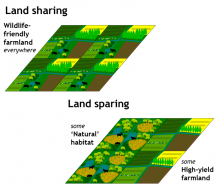
Are environmental benefits (carbon, biodiversity...) best served by sharing agricultural land with nature, or by maximising yield in some areas to spare tracts of land exclusively for nature in other…
2

Integrated Pest Management focusing on disease control in cereals
Link to video series playlist on YouTube
4
The Yield Enhancement Network (YEN) was launched in 2012 to support and energise on-farm learning-by-sharing and thus to enhance farming progress.
1

Cereal diseases affecting wheat, barley, oats, rye, triticale and maize can be caused by a variety of factors, including fungal, bacterial or viral infections, pests and insects, and environmental…

The extent to which disease develops in a crop is a balance between the likelihood of infection (i.e. disease pressure) and the ability of the crop to resist or avoid infection (i.e. field resistance…

Introduction
Over the last few months at FCT, we have seen an increase in the interest in understanding the impact on greenhouse gas emissions of adopting more regenerative farming practices.
As a…

The two key objectives of this work are to identify the best scenario for optimizing environmental impact and financial return for farmers and to determine the carbon cost-benefit of transitioning to…

With climate unpredictability increasingly impacting the agricultural sector, the UK’s farming landscape is undergoing a novel transformative shift. Here, Sarah MacAfee, Technical Officer for LEAF…

The IPMWORK network connects farmers and advisors across Europe. Developed based on LEAF and other existing networks, a series of IPM Hubs have supported farmers advancing their IPM programmes. …

As part of the development of the IPM Decisions platform, we carried out additional research and development both on the technical and social aspects relating to improving access to and uptake of…

6

Integrated Pest Management (IPM) is based on a diversity of pest management measures (prevention, non-chemical control, best practices for optimizing pesticide efficiency, etc.). These are combined…

3

Crop protection refers to practices and measures employed in agriculture to safeguard crops from both biotic (pests, diseases and weeds) and abiotic (environmental factors) stresses. They key goal of…

Widely present in many horticultural and arable fields, slugs can damage crops all year round. With impacts on yield and/or quality potentially severe, it is important to suppress populations of…

In this guide we explore the potential role for cut and carry systems on UK dairy farms and establish best-practice guidelines for farmers.
2

This page is to connect organisations, projects and resources that have an interest in improving the quality of our water sources.

Intercropping, an ancient agricultural practice, is experiencing a resurgence. It offers a variety of potential benefits, from boosting economic resilience to reducing the need for inputs and…