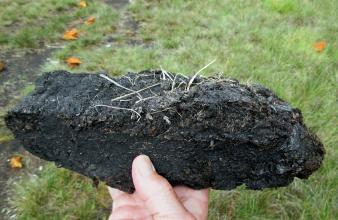

Lowland agricultural peats represent some of the most productive farming areas in the UK, supporting high-value horticultural crops and key staples such as wheat, potatoes, and sugar beet. However, these areas are also estimated to contribute around 1.5% of the UK’s total greenhouse gas emissions. Drainage for agriculture causes the organic matter in peat to oxidise and decompose, leading to visible peat loss and ongoing Greenhouse Gas emissions.
While all peatlands face degradation risks, managing lowland peat presents unique challenges. Unlike upland peat, where restoration is often prioritised due to limited opportunities for productive agriculture, lowland peat is capable of supporting intensive production. Taking this land out of use risks displacing food production and offshoring emissions.
The industry is working hard, in collaboration with policy makers, to develop a range of solutions to preserve our lowland peatlands, while still allowing agriculture to take place. Research is underway to establish methods and practices which present viable, commercial solutions to continue farming these areas, while minimising the impact on peatlands, and reducing emissions.
A mosaic approach is being considered to address the complexity of lowland peat management, including drainage systems, profitability, land use and environmental impacts etc. It combines conventional and wetter farming on more productive land, paludiculture where feasible, and restoration on more marginal areas—supporting climate goals, biodiversity, farm and food security resilience.
Resources:
Lowland Agricultural Peat Task Force report: https://assets.publishing.service.gov.uk/media/649d6fe1bb13dc0012b2e349/lowland-agricultural-peat-task-force-chairs-report.pdf
IUCN UK Peatland Programme:
https://www.iucn-uk-peatlandprogramme.org/
Fenland soil:


Infographics and map from https://assets.publishing.service.gov.uk/media/649d6fe1bb13dc0012b2e349/lowland-agricultural-peat-task-force-chairs-report.pdf