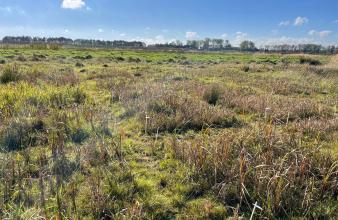

On lowland agricultural peat, traditional drainage leads to peat loss and greenhouse gas emissions. Paludiculture presents an opportunity to rewet these areas, reduce emissions, and maintain productive land use, particularly where conventional farming is less viable.
Unlike wetter farming, which supports conventional crops at slightly lower water tables, paludiculture focuses on wetland species – primarily Typha (bulrush), Phragmites (common reed), and sphagnum moss.
Research funded by Defra and Natural England is investigating a wide range of challenges – from crop trials and agronomy to mechanisation, water management, product development and the environmental, social, and financial implications of land use change. These crops show potential for use in construction, textiles, horticulture and energy.
Paludiculture is also being considered as part of a broader mosaic approach—a flexible land use concept that combines restoration, wetter farming, and conventional cropping to reflect the varied conditions and constraints of lowland peat landscapes.
Farmers in England can access support for water table management through Countryside Stewardship (Higher Tier), as with wetter farming.

Resources
Paludiculture.org:
https://www.paludiculture.org.uk/
Principles for Sustainable Peatland Paludiculture (IUCN):
Paludiculture UKCEH:
https://lowlandpeat.ceh.ac.uk/paludiculture