Soil association transition to agroecology page
LEAF Beacons of Excellence project
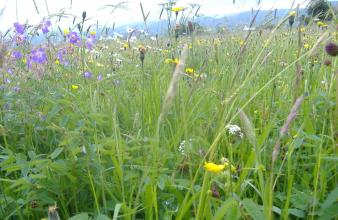

Agroecology is a holistic and integrated approach that simultaneously applies ecological and social concepts and principles to the design and management of sustainable agriculture and food systems. Definition from FAO.
Content below is from across the PEP community and is not necessarily endorsed by Stewards or by PEP
Innovative Farmers was established in 2012 by the Soil Association with the aim of bringing scientific rigour to on-farm trials co-designed by farmers and researchers. With a focus on sustainability and resilience, groups come together on discrete topics and on-farm trials addressing the topics that matter to them.
Regenerative farming looks to optimise the use of the ecological system and environment, in order to benefit from the natural ecosystem services that they provide.
The Farming and Land Use Team at the Soil Association have a specialist knowledge of all UK agricultural sectors as well as in depth understanding of organic and agroecological food production systems. Our goal is to support organic and non-organic farmers alike to transition towards more sustainable practices.
Tell us how you are improving your soils. Share useful resources, organisations and initiatives.
This Topic doesn't yet have a Stewarded summary, but connected groups, content and organisations show below. Click the 'Ask to Join' button if you would like to be a Steward for this Topic and provide a summary of current knowledge and recommend useful resources, organisations, networks and projects. "Like" this Topic if you would like to see it prioritised for providing a wikipedia style summary.
Report by Prof Tim Benton and Dr Helen Harwatt on sustainability in farming, regenerative agr
Cover crops are grown primarily to ‘protect or improve’ soils between periods of regular crop production. They can be effective at improving soil functions by increasing soil nutrient and water retention, improving soil structure/quality, reducing the risk of soil erosion, surface run-off and diffuse pollution by providing soil cover and by managing weeds or soil-borne pests.
Integrated farming is a type of farming that aims to maximize the efficiency and productivity of the farm by integrating different types of crops and animals into a single system.
Share your ideas and experience of how to improve nutrient efficiency and reduce dependence on artificial fertilisers
regenagri is an international regenerative agriculture program for securing the health of the land and the wealth of those who live on it.
Devon silvopasture 12-year on-farm trial including site at Rothamsted's North Wyke
We work to bring together unusual combinations of voices in order to devise a range of practical actions that can have significant impact on our climate, nature, health and economy.
Series of videos exploring agroecology produced by a partnership funded by Scottish Government.
An event to discuss how will we secure the plant varieties needed for more sustainable UK agriculture How will we secure the plant varieties needed for a more sustainable and resilient UK agriculture? Can the plant breeding community rise to the challenge, and what is needed to achieve this?
The new field lab with Innovative Farmers is investigating bale grazing, a common practice in North America and Canada, where bales are put out in summer to feed cattle through winter.
This book examines, discusses and shares over 30 years’ worth of research from the Allerton Project, a research and demonstration farm in the UK which has been carrying out applied interdisciplinary research to explore and explain the need to adapt the management of farmland for environmental protection and to provide public benefits.
A new report from A Bigger Conversation highlights the unique needs and perspectives – and values-based choices – of agroecological farmers when it comes to agricultural technologies.
Reducing your Carbon Footprint: Integrated approaches to reduce emissions and increase carbon sequestration
Scientific paper by Andrew Balmford & colleagues published in Nature Sustainability 2018:
Help us collate the knowledge sources, organisations and initiatives out there that are seeking to improve the farmed environment
FABulous Farmers is a European project supporting farmers in the transition to more agroecological practices on their farms. Soil Association are delivering activity in 3 UK pilot regions – South West England, West Midlands and Wales, with the National Trust leading activity in the East England. The project aims to reduce reliance on external inputs, like chemical fertilisers and pesticides, by encouraging the use of methods and interventions that increase the farm’s Functional AgroBiodiversity (FAB). These are targeted measures of biodiversity in and around the field to improve pollination, pest management, soil and water quality on the farmland.
Silvopasture is a form of agroforestry where trees are deliberately planted to be part of a farms livestock system. Three tree planting designs are being trialled as part of a field lab investigating the benefits of agroforestry.
Net zero is not just about emissions, it's also about balancing the amount of greenhouse gas released with the amount removed across your entire farm business.
Pathways to Sustainability - Scaling the Transition of Global Agriculture
In Devon, a group of six farmers and Rothamsted’s North Wyke research farm have teamed up through Innovative Farmers to form the Devon Silvopasture Network.
Carbon Calling CIC is a farmer-led movement founded in 2019 by Liz Genever and Nic Renison. It is aimed at farmers who are just on the turn - they know what they are doing isn't quite working but not sure what to do next. We are want to empower all livestock farmers in the UK to develop their systems to ensure they are profitable, environmentally aware and improving well-being.
The ADAS soils and nutrients team will share and discuss results from our recent cover crop research with Affinity Water, Anglian Water, and Portsmouth Water.
The delicate balance between food production and biodiversity preservation is one of the most critical challenges facing humanity. As the global population keeps growing, demands for food have increased substantially, leading to intensifying agricultural practices to boost yields. However, as we outline in this Issue Brief, this intensification can massively impact biodiversity and the environment - negatively and positively.
Do pigs fit into a regenerative farming system? Can their diet be sustainable? Can they be pastured?
Root crops present a particular challenge to farmers who are trying to adopt regenerative practices.
Tree-planting is a key part of the UK government’s plan to reach net zero by 2050, with a commitment to plant 30,000 hectares of new woodland every year. But where will all these trees go, and how can we ensure food production is maintained?
This report reviews the economic benefits that can be achieved from reduced tillage.
Stephen is a first generation farmer who has been farming organically for over two decades. This resource is from Agricology.
A day for farmers by farmers sharing experiences for improving performance and resilience in a challenging environment.
Join us for a morning tour and chat with Nuffield Scholar Toby, as we explore the benefits of cover cropping for climate-friendly farming.
This resource from Farm Consultancy Group describes one method for implementing an agroforestry livestock system.
Six Pasture for Life member farms have come together in an Innovative Farmers Field Lab to undertake a four year study to explore the impacts of bale grazing on soil and forage.
The phrase “Non-Inversion Tillage” (NI) as used in this review first requires definition. Any system which does not seek to substantially invert the soil profile is regarded as NI.
The project aimed to utilise mob grazing methods to manage grasslands better, increase sward species diversity, and create biodiverse pastures.
SCI invites you to join leading experts and change-makers to explore the potential of regenerative agriculture, a revolutionary approach to farming that goes beyond sustainability.
Join us for the Green Farm Collective Regenerative Agriculture Conference 2024, a gathering of speakers, demonstrations and trade stands that will be invaluable to anyone practising or thinking about regenerative farming.
Pastured poultry can be a great regenerative enterprise. Hear from the farmers making it work!
Biodiverse farming; making agro-ecology work for farmers, public and animal health and the environment
The discussions at COP28 highlight the critical role of agricultural innovations in achieving food security and climate goals sustainably.
Ever wondered which regenerative arable farming practices are the most effective or which combinations work best together?
Join us, in partnership with the Yorkshire Agricultural Society and The Farmer Scientist Network, as we tap into the expertise and experience of our speakers to find the answers that you need to take your business forward.
This paper from Small World Consulting feeds into the contentious debate surrounding how best to enable the UK’s farming and land use to evolve in light of the climate and ecological emergencies while supporting farming businesses, families and communities through this transition.
During this online workshop we aim to review existing knowledge gaps and identify key areas where future research efforts should be focused.
Transition Live will build upon the initiative from Farmers Weekly aimed at securing a sustainable future for your farm business.
Written for farmers and advisors this book will help you assess the potential business benefits of agroforestry for your farm or client and to understand the possible benefits to the wider environment.
Join us on a farm walk to explore how silvopasture has been incorporated onto this Biodynamic and organic mixed farm.
A mixed farming system, based around livestock and cropping, is a fundamental part of organic, agroecological and regenerative farming.
Calibrate Energy Engineering design, install and maintain heat pump technologies for farming clients UK-wide.
This recording from the Oxford Real Farming Conference is of a discussion between farmers involved in the Innovative Farmers Bale grazing project.
This booklet has been designed based on the principles of Integrated Farm Management (IFM) and highlights six simple steps to support you in implementing regenerative agricultural practices on farm.
We’re joined by James Robinson and Megan Gimber, who answer audience questions from our previous hedgerow and woodland panel discussion. They explore general hedgerow management from optimum hedge-laying cycle lengths and tree species selection to the best ways to repair existing hedgerows and what to do with coppiced brash.
The objective of this farmer-led research trial was to investigate a new approach to winter feed provision for livestock that considers the overall health of the farm system, including soil health, biodiversity, animal welfare, farmer welfare and economic sustainability.
Thinking about agroforestry? Then we have the event for "ewe."
Organic Management Techniques to Improve Sustainability of Non-Organic Farming.
Produced as part of the BEESPOKE Project, aimed at increasing levels of pollinators at local and landscape scales.
The Policy Brief, written by Colin Tosh, is based on evidence presented in, and feedback to the online workshop held 20/10/2021.
In this surgery LEAF will be considering how economic, practical and cultural factors could influence wide-scale agroforestry across the UK farming landscape.
In a recent RASE Farm of the Future webinar, three farmers shared their experiences of putting regenerative farming theory into practice.
Join us from 7pm until 8pm to explore the evidence behind whether regeneratively farmed food is more nutritious.
Rural Policy Centre Research Briefing.
Celebrating the growing global community of Agroforestry farms and farming – a farmer-led iniative, not a commercial event – no sponsors involved!
This document is intended for farmers looking to reduce their reliance on soya in pig systems, or as a jumping off point for those hoping to establish a new pastured pig operation.
The UK’s carbon market
Cover crops are grown primarily for the purpose of ‘protecting or improving’ between periods of regular crop production. There are four main types of use including; improving soil fertility, improving soil structure, managing weeds and pests and environmental management.
Value chains with close collaboration between actors, both from the supply chain and wider society, enable direct, dynamic and innovative, relationships that better facilitate management and sales of smaller volumes of diverse products.
We are delighted to be able to invite you to attend this Farm Walk to hear from the team at Lockerley Estate about how they are working to reduce farm-based emissions whilst storing more carbon into soils and non-crop biomass.
Delve deeper into the economic and environmental risks and rewards of regenerative farming
Every farm and field is different, with a wide interplay of different factors impacting on optimum soil management between them.
Times Agriculture is your authoritative resource for comprehensive agricultural knowledge. Delving beyond the fundamentals of agronomy, paddy cultivation, and subsistence farming, we explore cutting-edge practices like remote sensing and tunnel farming.
An opportunity to dig into how adopting more regenerative farming practices will affect your farm business”
Silvoarable systems are farming systems that integrate trees with arable cropping.
This 2018 report covers benefits agroforestry in England can provide to farmers and the environment as well as barriers to uptake, case studies, and recommendations.
Farmers are invited to join RASE for a Farm of the Future demonstration day at Plumpton College in East Sussex.
Collaboration and innovation are key to sustainable growth. That's why AAB, Organic Research Centre (ORC) and Agroecology Research Collaboration (ARC), which includes the Landworkers Alliance (LWA) are thrilled to organise this event dedicated to the benefits of on-farm participatory research.
The use of cover crop and green manures is one of the best practices promoted by Best4Soil. The different aspects of this natural method for maintaining and improving the soil health are presented in this video.
Integration of livestock and crops as a viable alternative to specialized systems that can improve resource efficiency and ecosystem services. A case study from Lemnos, Greece.
Includes a study of feasibility of harvesting and sorting + 52 technical sheets from farmers' experiences.
A year-long traineeship in Agroecology with land-based learning to help students transition into, or upgrade their skills in, the world of regenerative farming. The world of farming and food production is changing. The challenges of climate change and fluctuating economic environments ask farmers to diversify for resilience. Agroecology is a strategy that could help us with these challenges. Informed by traditional global practices, agroecology explores the use of natural systems to promote good food for everyone, forever. This course is ideal for students who want to further their experience in agroecology, agroforestry, soil science, and social and economic elements of regenerative approaches to land management and agriculture. You will study in real-life training settings, within the Black Mountains on the border of Wales and England. Alongside your studies, you will undertake an optional work-based placement to enhance your employability skills and embed your learning. In partnership with NPTC Group of Colleges, certified by City & Guilds. We are a part of The Agroecology Learning Collective.
Are cover crops the latest trend or do they hold real benefits for your soil? Tracy Valentine from The James Hutton Institute will help to answer these questions and more.
A unique college in and around the Bannau Brycheiniog National Park, Wales, to create a future where nature and humans thrive. BMC focuses on the challenge of our times: how to build a fair and just society within safe planetary boundaries. We believe in education that empowers people to build resilience in the face of the climate and ecological crisis. Our approach is built on rethinking traditional learning to foster the skills, creativity, and systems thinking needed for a more sustainable future. Our countryside-based campus is a living classroom, with access to biodiverse landscapes that inspire and challenge our students to connect deeply with nature.
With Dr Shadi Hashem from Aberdeen University, Scotland and Andreia Arbenz, policy researcher at Agroscope, Switzerland
Join us for this free webinar to hear about the latest research from Affinity Water conducted by ADAS on cover crop nitrogen release.
Dr D. J. Coston, Senior Entomologist (RSK ADAS Ltd) Dr Emma Burnett, Agriculture and Sustainability Researcher (Fielden Whisky)
As a Pulse Pioneer with the NCS Project, John contributes to the wider effort to build protein self-sufficiency and arable-livestock integration within UK farming. Building
Climate breakdown affects all sectors of societies and economies and cannot be addressed through the lens of one subject. BA (Hons) Sustainable Futures: Arts, Ecology and Systems Change has optional pathways to allow you to shape your own learning journey. From the arts to agroecology, from neuroscience to new approaches to economics.. BA (Hons) Sustainable Futures: Arts, Ecology and Systems Change is an interdisciplinary programme combining a grounding in theories of change, creative practice based on artistic methods, ecological thinking, political economy and sociotechnical systems. Our programme invites you to develop the ‘futures-making skills’ necessary for making sense of a rapidly changing world: critical thinking, creativity, communication, collaboration, and compassion. The foundation of the BA is learning how to learn about the natural world and human societies in order to become an agent of change. You will gain the ability to communicate and collaborate with peers in order to imagine – and deliver – fundamental changes to current systems. In partnership with Cardiff Metropolitan University.
Date : 5th June 2025 | 2:00 pm - 5:30 pm Venue : Heath Farm, Great Bircham, King's Lynn, PE31 6RL
Every January the Oxford Real Farming Conference connects people in the UK and around the globe who want to transform our food and farming system. Find out more.
Please find attached a link to the 2025 Paludiculture Survey, which we would be very grateful if you would complete to help inform our understanding of the current understanding and needs for research and KE on paludiculture and wetter farming on peat soils moving forward.
The Agroecology Research Collaboration warmly invites you to this webinar about ADOPT.
https://doi.org/10.32942/X2B92K Authors Benjamin Woodcock, Samantha Cook, Lucy Humles, Sarah Hulmes, Martin Torrance, John Redhead, Jennifer Swain, Richard Ostler, Jordan Rainey, Maico G Weites, Marek Nowakowski, James M. Bullock, Claire Carvell, Jonathan Storkey, Richard F. Pywell
Study of 17 English farms finds nature-friendly practices can support yields, but only modest schemes are financially viable without subsidies
A technical event at Field Hall Farm, exploring the role of agroecological farming in improving livestock health and performance.
This document highlights the crucial role of livestock agroecosystems in rural development, landscape management, and food security, while noting that public debate often focuses mainly on negative aspects such as environmental impacts, human health, and animal welfare.
Analysis of 30 long running farm experiments in Europe and Africa by Rothamsted Research has show


Discussion
A farmer's perspective on agroecology: