Definition & Core Concept
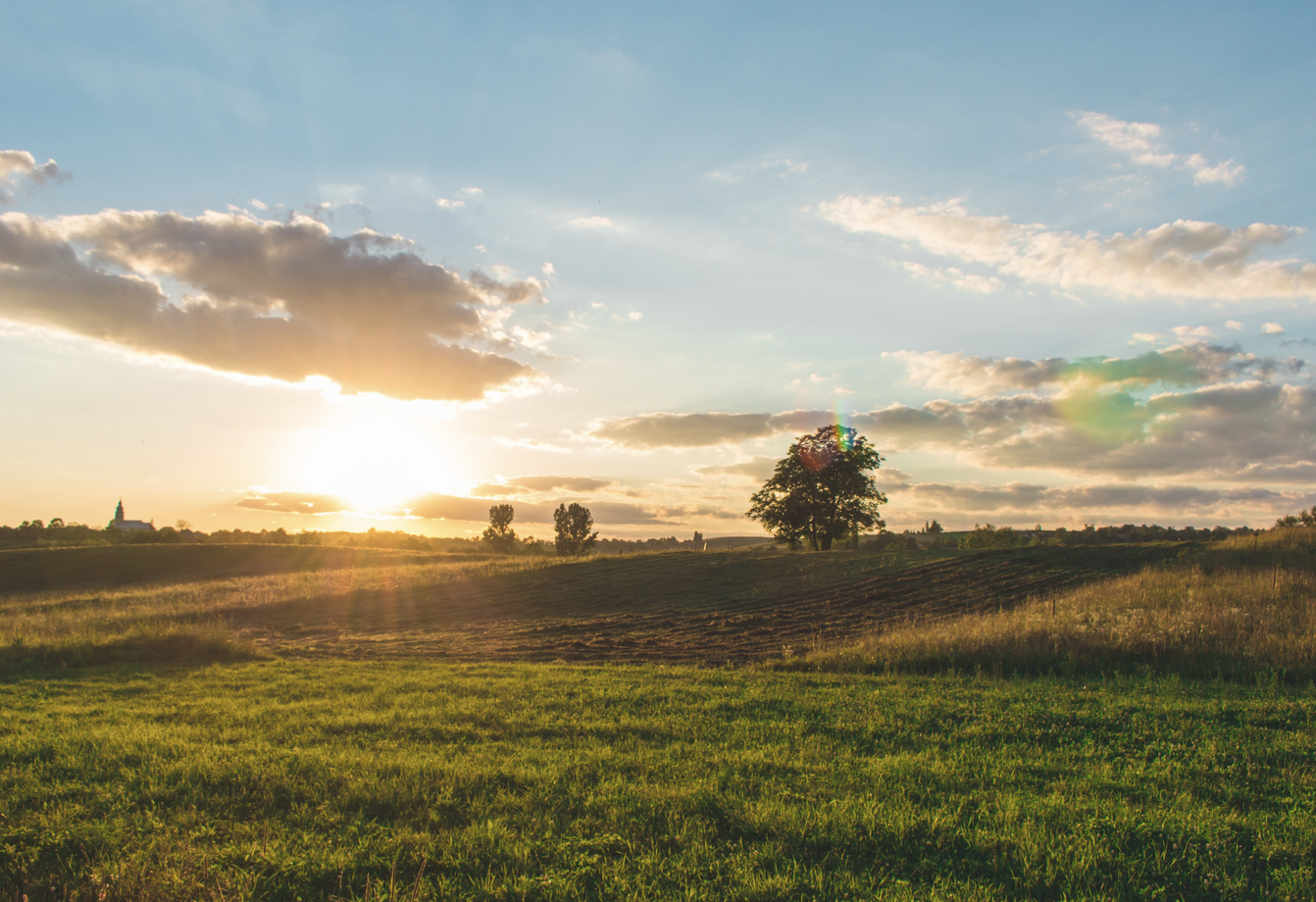
Agroforestry—also referred to as agro-sylviculture—is a deliberate land-use strategy integrating productive trees into agricultural landscapes, whether alongside crops, pasture, or both. This approach fosters synergy between plants and animals for higher ecological and productive value

Key Benefits 

  • Biodiversity Enhancement: Trees within agricultural systems foster richer ecosystems, encouraging natural pest control and improved pollination services

  • Climate Resilience & Environmental Health: Integrating trees helps regulate microclimates, supports soil structure, and enhances overall ecosystem functionality

Practical Resource: The Agroforestry Handbook

FarmPEP features a dedicated resource titled "The Agroforestry Handbook", designed to help land managers and practitioners assess the business potential of agroforestry on their farms or for client advisory. It provides insights into both on-site farm benefits and broader community or environmental impacts

Visit the Agroforestry Hub on Agricology for a collection of resources to help you adopt agroforestry on farm.
Related Organisations

Content below is from across the PEP community and is not necessarily endorsed by Stewards or by PEP

Topic Comments

Discussion

The Organic Research Centre is part of a project that’s working towards developing better guidance and tools to help land managers look after and benefit from the trees on their farms, taking into account the increasing pressure all our trees face from climate change and tree health issues.

We want to work with a team of farmers to:

  • Understand the value that trees provide to farmers like you, how farmers are already managing their trees and responding to potential threats to their survival – as well as any barriers to taking action;
  • Identify and prioritise potential solutions to overcome some of these barriers and help to ensure that trees continue to be a valuable asset of the farming system into the future; and
  • Help ensure that the solutions developed in this project work for farmers like you.

The two events:

We're seeking 12 farmers from the North of England (North East, North West, Yorkshire and Humber) for a workshop on 27th November 2025, 10am–3:15pm, at Gowbarrow Hall Farm, Cumbria. Participants will receive £100 (inc. VAT), plus travel cost reimbursement, and enjoy complimentary lunch and refreshments.

We're seeking 12 farmers from the East of England (East Anglia, Essex, Bedfordshire & Hertfordshire)—especially those in cereals, cropping, horticulture, or pigs/poultry—to join an online workshop via MS Teams on 01 December 2025, 10am–3:15pm. Participants will receive £100 (inc. VAT) for their time.

If you think you can help, please complete our online expression of interest form by Midday 14 Nov, 2025

Workshop places are limited: workshop participants will be drawn from the expressions of interest received via this form. We would like to work with a small number of workshop participants in later stages of the project, and if selected to take part in the workshop then there will be a later opportunity to express interest in continued involvement.

More about the project :HERE 

This is a collaborative research project with Forest Research, the FWAG South West, the Countryside and Community Research Institute and the University of Exeter. The project is funded by Defra through the Centre for Forest Protection.

0

Connected Content

There are around 3.2M ha of woodland in the UK. This is set to increase substantially over the coming years due to a range of policy, social, environmental and commercial drivers, including Net Zero, Biodiversity Net Gain, ELMs, Local nature recovery plans and carbon trading.

The Farming and Land Use Team at the Soil Association have a specialist knowledge of all UK agricultural sectors as well as in depth understanding of organic and agroecological food production systems. Our goal is to support organic and non-organic farmers alike to transition towards more sustainable practices.

The Forestry Commission increases the value of woodlands to society and the environment.  It is a non-ministerial government department.

regenagri is an international regenerative agriculture program for securing the health of the land and the wealth of those who live on it.

Devon silvopasture 12-year on-farm trial including site at Rothamsted's North Wyke

Series of videos exploring agroecology produced by a partnership funded by Scottish Government. 

Promoting Sustainable Choices in Agriculture and Forestry

Download a copy of the guide to Agroforestry from the Soil Association website below.

FABulous Farmers is a European project supporting farmers in the transition to more agroecological practices on their farms. Soil Association are delivering activity in 3 UK pilot regions – South West England, West Midlands and Wales, with the National Trust leading activity in the East England. The project aims to reduce reliance on external inputs, like chemical fertilisers and pesticides, by encouraging the use of methods and interventions that increase the farm’s Functional AgroBiodiversity (FAB). These are targeted measures of biodiversity in and around the field to improve pollination, pest management, soil and water quality on the farmland.

Silvopasture is a form of agroforestry where trees are deliberately planted to be part of a farms livestock system. Three tree planting designs are being trialled as part of a field lab investigating the benefits of agroforestry.

Agroforestry has the power to improve biodiversity and soil health, cut carbon emissions and produce healthy nutritious food and sustainable timber. Do you want to create resilient and productive farm and food systems? ​Then this show is for you. The Agroforestry Show is the first of its kind aimed at bringing together farmers, foresters, tree surgeons, growers, graziers, advisors, funders, food businesses and agroforesters!

What is silvopasture? Silvopasture is a form of agroforestry where trees are deliberately planted to be part of a farms livestock system. Three tree planting designs are being trialled as part of a field lab investigating the benefits of agroforestry.

In Devon, a group of six farmers and Rothamsted’s North Wyke research farm have teamed up through Innovative Farmers to form the Devon Silvopasture Network.

A discussion on how to make silvo-horticultual agroforestry work

Trees – what role could they play in helping reduce emissions in our food system? Prof Heiko Balzter (University of Leicester) and one our Champions last year, has synthesised research on agroforestry in this report – Agroforestry as a tool for net zero in the UK.

Tree-planting is a key part of the UK government’s plan to reach net zero by 2050, with a commitment to plant 30,000 hectares of new woodland every year. But where will all these trees go, and how can we ensure food production is maintained?

Cobalt is an essential trace element for sheep used to make vitamin B12 which supports growth.  However, cobalt deficiency (also known as ill thrift/pine) can be common in weaned lambs.  This can cause significant production losses even at a sub clinical level due to poor growth rates. Innovative Farmers are launching a new field lab where farmers will be feeding willow to lambs and measuring their cobalt levels against a control group, coordinated by Soil Association with University of Nottingham as researchers. An Agroforestry Learning Network will be run alongside the trials, managed by the Soil Association, discussing the practicalities of feeding willow to lambs.

This resource from Farm Consultancy Group describes one method for implementing an agroforestry livestock system.

Silvopastoral agroforestry – integrating shelterbelts, hedgerows or in-field trees with grazing livestock – can provide domestic animals with benefits, including shelter and shade, as well as supplementing their diets as tree browse or fodder.

Agroforestry systems, where productive trees are integrated into agricultural land, can deliver benefits to biodiversity, natural pest control, and pollination.

PGMs are fertilisers from perennial plant material. In this Innovative Farmers webinar we discuss how the system can work best for growers

Silvopasture is a form of agroforestry where trees are deliberately planted to be part of a farms livestock system. Three tree planting designs are being trialled as part of a field lab investigating the benefits of agroforestry.

Written for farmers and advisors this book will help you assess the potential business benefits of agroforestry for your farm or client and to understand the possible benefits to the wider environment.

Join us on a farm walk to explore how silvopasture has been incorporated onto this Biodynamic and organic mixed farm.

Join the team at Kindling Farm to see how they set up the agroforestry system on their 77 acre community owned farm.

Thinking about agroforestry? Then we have the event for "ewe."

The Policy Brief, written by Colin Tosh, is based on evidence presented in, and feedback to the online workshop held 20/10/2021.

In this surgery LEAF will be considering how economic, practical and cultural factors could influence wide-scale agroforestry across the UK farming landscape.

Celebrating the growing global community of Agroforestry farms and farming – a farmer-led iniative, not a commercial event – no sponsors involved!

 ‘Management to Promote Flowering Understoreys Benefits Natural Enemy Diversity, Aphid Suppression and Income in an Agroforestry System,’

The deliberate integration of biomass crops into agroforestry systems can deliver a wide range of environmental benefits including improving soil health, carbon sequestration, enhancing biodiversity, and improving water quality.

Because successful and sustainable agroforestry practices are best developed by farmers and land owners working in partnership with researchers, extension staff, and other rural businesses, AGFORWARD used a participatory approach to ensure the effective involvement of all these stakeholders. These leaflets provide summaries of key innovations to systems.

Based on substantial field experience, Philippe Van Lerberghe with colleagues from the French Agroforestry Association, the World Agroforestry Centre and the other AGFORWARD partners has created 10 "Agroforestry Best Practice" leaflets.

Silvoarable systems are farming systems that integrate trees with arable cropping. 

This 2018 report covers benefits agroforestry in England can provide to farmers and the environment as well as barriers to uptake, case studies, and recommendations.

Nathan Richards of Troed Y Rhiw farm, Ceredigion, will talk to us about a particular aspect of agroforestry under cover, using stone fruit.

Agroforestry is a long game — but research funding isn’t always. With trees taking years to mature, designing meaningful short-term agroforestry trials can be tricky. Defra’s ADOPT competition offers funding for projects up to 24 months, making it best suited to research that either focuses on early tree establishment or taps into existing, mature agroforestry systems. 

A micro-festival nestled in the hills of Bannau Brycheiniog, hosted by Black Mountains College. Unlock your capacity to create a future in which people and the planet can thrive. This festival brings together community builders and activists, farmers, artists, politicians, food leaders and many more all pioneering practical systems change across the UK and internationally.  Through a day of interactive sessions, workshops, and talks, explore how they are doing it and how you too can help leverage change in small and big ways to build a more just and regenerative society.  

Wednesday 10th to Thursday 11th September ​ at Woodoaks Farm, Maple Cross, Hertfordshire

The annual Forestry Conference, organised by the CLA, Forestry Commission and Grown in Britain, is back for a eighth year - with a highly topical theme and great line-up of speakers.

Agri-Tech Week celebrates its 12th year in 2025 – featuring eleven events across the country from Newcastle to Norfolk, Essex to Earth satellites (and lots online!).

The ‘Farmer Action for Tree Resilience’ project, led by Forest Research in collaboration with the University of Exeter, CCRI, FWAG South West, and the Organic Research Centre, focuses on understanding how farmers perceive and respond to the challenges of tree health and resilience on their land. It explores the motivations, barriers, and decision-making processes that shape whether and how farmers adopt practices to protect and enhance the health of trees within agricultural landscapes.  

Wakelyns, encircled by conventional arable farming, stands as an oasis of trees teeming with birdsong and insects. Integrating trees for timber, energy, and fruit production into an organic crop rotation, Wakelyns was founded by the late plant pathologist, Professor Martin Wolfe, to implement his theories that agrobiodiversity is key to achieving sustainable and resilient agriculture. Marking 30 years of agroforestry at Wakelyns, this revised edition of ‘Resilience Through Diversity’ celebrates the contributions of Martin and Ann Wolfe, fellow researchers from the Organic Research Centre, and the broader Wakelyns community. Since 2020, their work has been continued and expanded by their son David Wolfe and his wife Amanda. The original review was written by Jo Smith and Sally Westaway in 2020, with support from the Woodland Trust. This edition, revised by Janie Caldbeck and Will Simonson, was made possible through a partnership with an anonymous donor and Stewardship. It includes new sections on ‘Biodiversity for Agriculture and Conservation’ featuring our latest research at Wakelyns as part of the Agromix project. The recent work on pond restoration and creation at Wakelyns is also discussed. Additionally, we share how, since the deaths of Martin and Ann, David and Toby Wolfe and their families have continued the organic rotation agroforestry while transforming Wakelyns into a hub for farming, food, research, and the environment, emphasising short food chains, enterprise stacking, and community involvement. To download the free publication please click on the  'website link’ and fill out the form

ORC Researcher Dr. Colin Tosh recently developed a new framework for modelling the dynamics of agroecosystems, and here you are given full interactive access to these models. One thing that ORC prides itself on is making its research available to farmers, growers, and the public. This is usually in the form of online or in-person webinars, on-farm events, or articles, but on this occasion, we tried our hand at a bit of coding and software development. Dr. Colin Tosh, ORC Senior Agroforestry Researcher, recently published a new model of how the living things in arable agroecosystems interact, both in the presence and absence of in-field trees. This model was used to investigate how trees might buffer crop yield stress events such as crop pest or disease outbreaks, and in a forthcoming paper, it investigates how pesticides impact the ecosystem services that trees provide for arable farmers.

Write whatever you want here - this is the main section. You can add links, add pictures and embed videos. To paste text from elsewhere use CTRL+Shift+V to paste without formatting. Add videos by selecting 'Full HTML' below, copying the 'embed html' from the source page (eg Youtube), clicking 'Source' above and pasting where you want the video to appear.
You can upload an image here. It can be jpg, jpeg, gif or png format.
Upload requirements

You can upload a file here, such as a pdf report, or MS Office documents, Excel spreadsheet or Powerpoint Slides.

Upload requirements
Authors Order
Add Authors here - you can only add them if they already exist on PEP. Just start writing their name then select to add it. To add multiple authors click the 'Add another item' button below.

Please ensure that you have proof-read your content. Pages will go to an admin for approval before going live.

Configure the meta tags below.

Use tokens to avoid redundant meta data and search engine penalization. For example, a 'keyword' value of "example" will be shown on all content using this configuration, whereas using the [node:field_keywords] automatically inserts the "keywords" values from the current entity (node, term, etc).

Browse available tokens.

Simple meta tags.

The text to display in the title bar of a visitor's web browser when they view this page. This meta tag may also be used as the title of the page when a visitor bookmarks or favorites this page, or as the page title in a search engine result. It is common to append '[site:name]' to the end of this, so the site's name is automatically added. It is recommended that the title is no greater than 55 - 65 characters long, including spaces.
A brief and concise summary of the page's content, preferably 150 characters or less. Where as the description meta tag may be used by search engines to display a snippet about the page in search results, the abstract tag may be used to archive a summary about the page. This meta tag is no longer supported by major search engines.

Meta tags that might not be needed by many sites.

Geo-spatial information in 'latitude; longitude' format, e.g. '50.167958; -97.133185'; see Wikipedia for details.
Geo-spatial information in 'latitude, longitude' format, e.g. '50.167958, -97.133185'; see Wikipedia for details.
Robots
A comma-separated list of keywords about the page. This meta tag is used as an indicator in Google News.
Highlight standout journalism on the web, especially for breaking news; used as an indicator in Google News. Warning: Don't abuse it, to be used a maximum of 7 times per calendar week!
This meta tag communicates with Google. There are currently two directives supported: 'nositelinkssearchbox' to not to show the sitelinks search box, and 'notranslate' to ask Google not to offer a translation of the page. Both options may be added, just separate them with a comma. See meta tags that Google understands for further details.
Used to rate content for audience appropriateness. This tag has little known influence on search engine rankings, but can be used by browsers, browser extensions, and apps. The most common options are general, mature, restricted, 14 years, safe for kids. If you follow the RTA Documentation you should enter RTA-5042-1996-1400-1577-RTA
Indicate to search engines and other page scrapers whether or not links should be followed. See the W3C specifications for further details.
Tell search engines when to index the page again. Very few search engines support this tag, it is more useful to use an XML Sitemap file.
Control when the browser's internal cache of the current page should expire. The date must to be an RFC-1123-compliant date string that is represented in Greenwich Mean Time (GMT), e.g. 'Thu, 01 Sep 2016 00:12:56 GMT'. Set to '0' to stop the page being cached entirely.

The Open Graph meta tags are used to control how Facebook, Pinterest, LinkedIn and other social networking sites interpret the site's content.

The Facebook Sharing Debugger lets you preview how your content will look when it's shared to Facebook and debug any issues with your Open Graph tags.

The URL of an image which should represent the content. The image must be at least 200 x 200 pixels in size; 600 x 316 pixels is a recommended minimum size, and for best results use an image least 1200 x 630 pixels in size. Supports PNG, JPEG and GIF formats. Should not be used if og:image:url is used. Note: if multiple images are added many services (e.g. Facebook) will default to the largest image, not specifically the first one. Multiple values may be used, separated by a comma. Note: Tokens that return multiple values will be handled automatically. This will be able to extract the URL from an image field if the field is configured properly.
The URL of an video which should represent the content. For best results use a source that is at least 1200 x 630 pixels in size, but at least 600 x 316 pixels is a recommended minimum. Object types supported include video.episode, video.movie, video.other, and video.tv_show. Multiple values may be used, separated by a comma. Note: Tokens that return multiple values will be handled automatically.
A alternative version of og:image and has exactly the same requirements; only one needs to be used. Multiple values may be used, separated by a comma. Note: Tokens that return multiple values will be handled automatically. This will be able to extract the URL from an image field if the field is configured properly.
The secure URL (HTTPS) of an image which should represent the content. The image must be at least 200 x 200 pixels in size; 600 x 316 pixels is a recommended minimum size, and for best results use an image least 1200 x 630 pixels in size. Supports PNG, JPEG and GIF formats. Multiple values may be used, separated by a comma. Note: Tokens that return multiple values will be handled automatically. This will be able to extract the URL from an image field if the field is configured properly. Any URLs which start with "http://" will be converted to "https://".
The type of image referenced above. Should be either 'image/gif' for a GIF image, 'image/jpeg' for a JPG/JPEG image, or 'image/png' for a PNG image. Note: there should be one value for each image, and having more than there are images may cause problems.
The date this content was last modified, with an optional time value. Needs to be in ISO 8601 format. Can be the same as the 'Article modification date' tag.
The date this content was last modified, with an optional time value. Needs to be in ISO 8601 format.
The date this content will expire, with an optional time value. Needs to be in ISO 8601 format.

A set of meta tags specially for controlling the summaries displayed when content is shared on Twitter.

Notes:
  • no other fields are required for a Summary card
  • Photo card requires the 'image' field
  • Media player card requires the 'title', 'description', 'media player URL', 'media player width', 'media player height' and 'image' fields,
  • Summary Card with Large Image card requires the 'Summary' field and the 'image' field,
  • Gallery Card requires all the 'Gallery Image' fields,
  • App Card requires the 'iPhone app ID' field, the 'iPad app ID' field and the 'Google Play app ID' field,
  • Product Card requires the 'description' field, the 'image' field, the 'Label 1' field, the 'Data 1' field, the 'Label 2' field and the 'Data 2' field.
A description that concisely summarizes the content of the page, as appropriate for presentation within a Tweet. Do not re-use the title text as the description, or use this field to describe the general services provided by the website. The string will be truncated, by Twitter, at the word to 200 characters.
By default Twitter tracks visitors when a tweet is embedded on a page using the official APIs. Setting this to 'on' will stop Twitter from tracking visitors.
The URL to a unique image representing the content of the page. Do not use a generic image such as your website logo, author photo, or other image that spans multiple pages. Images larger than 120x120px will be resized and cropped square based on longest dimension. Images smaller than 60x60px will not be shown. If the 'type' is set to Photo then the image must be at least 280x150px. This will be able to extract the URL from an image field if the field is configured properly.
The MIME type for the media contained in the stream URL, as defined by RFC 4337.